
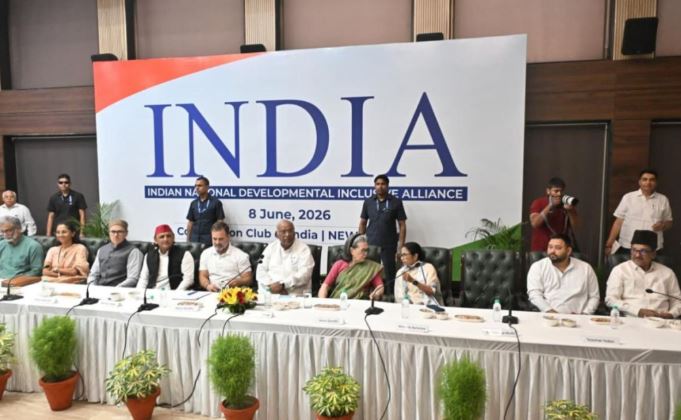
New Delhi: Leaders of the opposition INDIA bloc met in the national capital on Monday in their first major formal gathering since the 2024 Lok Sabha elections, seeking to revive coordination and present a united front against the BJP-led NDA government. The meeting was attended by 25 parties and several senior opposition leaders, including Rahul Gandhi, Sonia Gandhi, Mallikarjun Kharge, Mamata Banerjee, Akhilesh Yadav, Tejashwi Yadav, Omar Abdullah and Mehbooba Mufti.
Notably, the DMK and the Aam Aadmi Party stayed away from the meeting. The DMK’s absence comes amid its political differences with the Congress in Tamil Nadu, while AAP has publicly distanced itself from the opposition alliance.
After the meeting, Congress president Mallikarjun Kharge said the alliance had reached a consensus on five key issues and would jointly campaign on them in the coming months. Among the major concerns discussed were the Special Intensive Revision (SIR) of electoral rolls, alleged voter disenfranchisement, examination controversies, attacks on opposition-ruled states, issues affecting marginalised communities and concerns over the Centre’s foreign policy. The alliance also agreed to hold meetings more frequently to strengthen coordination among member parties. As part of this strategy, leaders decided that the next INDIA bloc meeting will be held in Hyderabad in August.
Kharge also emphasized the need to carry forward the “spirit of unity,” arguing that the opposition must work together to counter what he described as governance failures by the Centre. The alliance has decided to write to the Chief Justice of India regarding concerns linked to the SIR exercise and electoral processes. It also demanded accountability over recent examination-related controversies.
The meeting comes at a time when the INDIA bloc is facing internal challenges following recent electoral setbacks and disagreements among some constituent parties. However, the presence of top opposition leaders was seen as an attempt to project unity and revive the alliance’s political momentum ahead of future electoral contests.
Political observers believe the meeting was aimed at reaffirming the relevance of the opposition alliance ahead of upcoming state elections and future national political battles. While differences remain among some partners, the decision to adopt a common agenda and continue regular consultations indicates an effort to keep the coalition united on issues it considers important for the country.